
Loading...
Cold walls and high heating bills in an older Eau Claire home often trace back to the same problem - walls that were never properly insulated. We fix that without tearing your home apart.
Wall insulation in Eau Claire slows heat from escaping through your exterior walls during Wisconsin winters - most blown-in retrofit jobs are completed in a single day without opening finished walls. Insulation works by resisting heat flow, so the warmth your furnace generates stays inside longer. The U.S. Department of Energy recommends exterior walls in Wisconsin reach a total R-value of R-13 to R-21 depending on construction type, and many older homes here fall well short of that.
If your Eau Claire home was built before 1980, the odds are good that the walls have little or nothing in them. That means your heating system is working overtime from October through April, pushing heat through bare wood framing and out into the cold. Good wall insulation is one of the most cost-effective upgrades you can make in a cold climate, and it pairs naturally with our blown-in insulation service for attics and other spaces where the same material does the job.
If your gas or electric bill climbs sharply from October onward and stays high through March, your walls may be letting heat escape faster than your furnace can replace it. Eau Claire's heating season runs more than six months, and a home with under-insulated walls forces your system to run almost constantly just to stay comfortable. This is one of the clearest signs wall insulation is worth investigating.
Stand near an exterior wall in your living room on a cold winter day and hold your hand close to the surface. If the wall feels noticeably cold to the touch, or if you sense a slight draft even with windows closed, heat is moving through that wall much faster than it should. This is especially common in Eau Claire homes built before 1970, where wall cavities were often left empty.
In Eau Claire, prevailing winter winds come from the northwest, and north- and west-facing walls take the brunt of that cold. If certain rooms are consistently harder to heat and they face north or west, the walls on those sides may have little or no insulation. This pattern shows up repeatedly in older Eau Claire neighborhoods and is very fixable.
When warm indoor air meets a cold, poorly insulated wall surface, moisture can condense on or inside the wall. If you see water staining, peeling paint, or soft spots near exterior walls, your wall assembly is struggling with both temperature and moisture. In Eau Claire's climate, this problem tends to get worse each winter if it is not addressed.
For homes with already-finished walls, the most practical approach is blown-in retrofit insulation. A crew drills small holes along the top of each wall cavity, fills the space with loose insulation material through a hose, then patches the holes and replaces any siding sections removed. The process is fast, effective, and does not require gutting your rooms. We pair this with our air sealing services on the same visit whenever the home calls for it, since sealing gaps alongside insulation delivers noticeably better results in older Eau Claire construction.
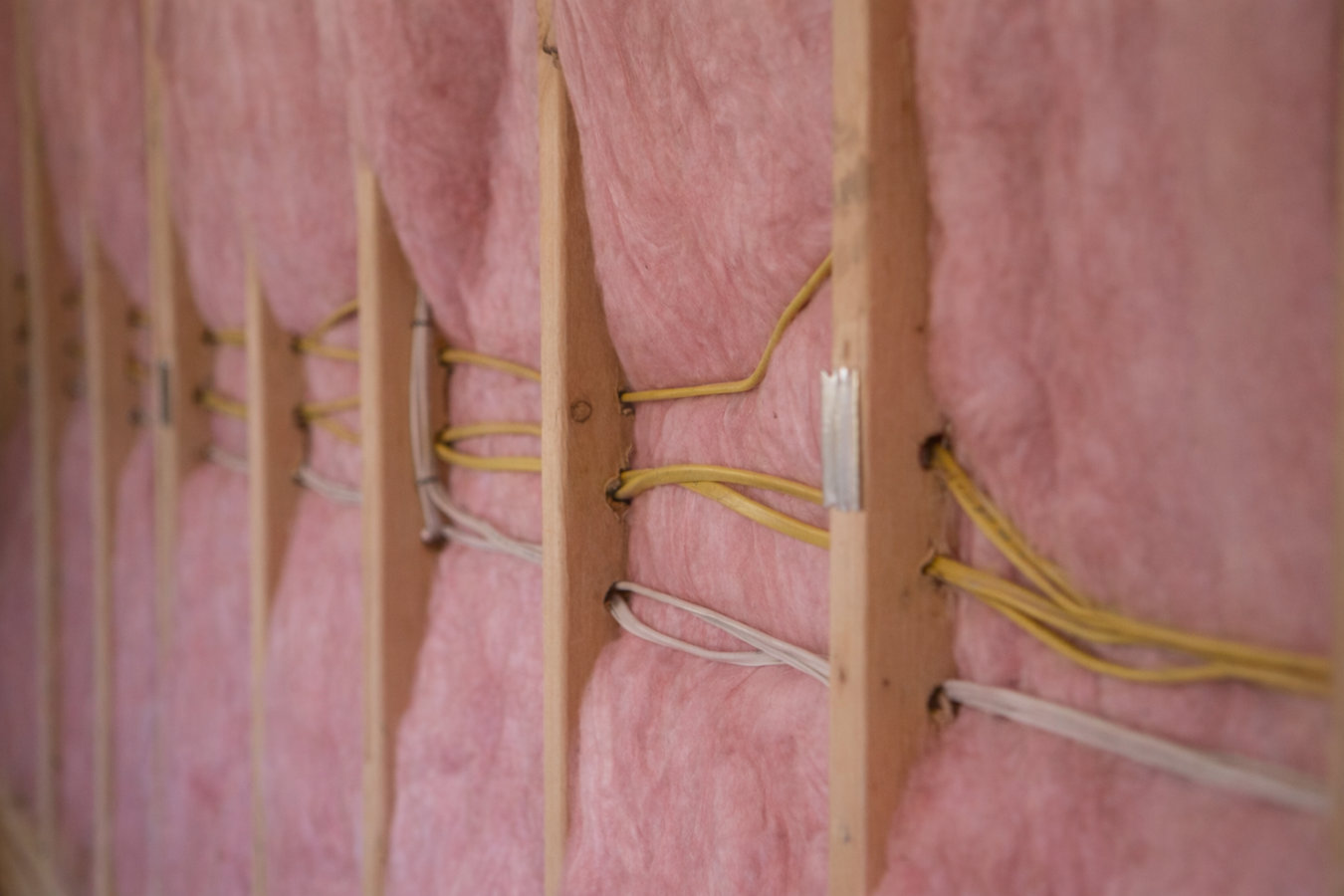
For homes undergoing renovation where walls are already open, batt insulation is a straightforward and cost-effective option that goes in between studs before drywall closes everything up. Both approaches achieve the target R-value for Wisconsin's Climate Zone 6. We assess your home's specific construction and recommend what makes sense for your situation - not just what is easiest to install. Wisconsin's Focus on Energy program offers cash rebates for qualifying wall insulation projects, which we help you access as part of every job.
Best for finished walls in existing homes - no demolition required, completed in a single day for most Eau Claire houses.
Ideal during renovations when walls are already open - cost-effective and fast when studs are accessible before drywall goes up.
A variant of blown-in that compresses material more tightly into the cavity, reducing settling and improving long-term performance.
Older Eau Claire wall assemblies sometimes need air sealing alongside insulation to prevent moisture from getting trapped - we check for this before we start.
Eau Claire sits squarely in Climate Zone 6, one of the coldest federal climate designations. Average January lows sit around 4 degrees Fahrenheit, and heating season stretches from October into April - that is more than six months of continuous heat loss through under-insulated walls. The Department of Energy recommends higher insulation levels for this climate precisely because the temperature difference between indoors and outdoors is so extreme for so long. Neighborhoods like Randall Park and the Emmons Creek area have dense concentrations of pre-1960 homes where wall cavities were never insulated to begin with. We work in these neighborhoods regularly and know the construction patterns well. Homeowners in Altoona and Chippewa Falls deal with the same issues and call us for the same reason.
The Chippewa River valley also creates seasonal humidity swings that older wall assemblies were not designed to handle. When insulation is added to these walls without checking air sealing at the same time, moisture can get trapped and lead to mold or soft wood over time. We assess your wall construction before recommending a material, and we talk to you about air sealing as part of the same project - not as an upsell, but because skipping it leads to problems that end up costing more to fix later. For external guidance on what insulation levels Wisconsin homes should target, the U.S. Department of Energy insulation guide is the most reliable reference.
We ask a few quick questions about your home's age and square footage so we come prepared. You will hear back within one business day to confirm your assessment appointment.
We walk your exterior walls, check what is already in the cavities, and look at any moisture concerns. You receive a written estimate at the end of the visit - no pressure, no vague quotes.
For blown-in work, we drill small holes along the top of each wall cavity and fill them with insulation. Most Eau Claire homes are done in four to eight hours. You can stay home the entire time.
Every hole is patched before we leave. If we worked from the exterior, siding goes back the same day. We walk you through any Focus on Energy rebate paperwork so you get your money back.
No obligation. Written quote. We answer within one business day.
(534) 400-0045A large share of Eau Claire's housing stock was built before modern insulation standards existed. We work in these homes every week and know how to navigate plaster walls, irregular cavity depths, and older framing without causing damage to what is already there.
We pull building permits from the City of Eau Claire when a job requires one and schedule the city inspection so the work is verified against Wisconsin standards. You get a documented record of every project before and after we do it.
Wisconsin's Focus on Energy program offers real cash back for qualifying wall insulation projects in Eau Claire. We know the paperwork, we know the requirements, and we handle the submission so you do not have to figure it out yourself. Many homeowners recover a meaningful portion of the project cost this way.
We give you a written scope and price before any work starts. If we find something unexpected during the job - a moisture issue, a section of wall that needs different treatment - we tell you before we do anything. You decide what happens next.
The Building Performance Institute sets standards for how homes should be assessed and insulated as a system - we follow those standards on every job, which matters in older Eau Claire homes where insulation, moisture, and air movement all interact. That whole-home approach is what separates a job done right from one that just looks finished.
Pair wall insulation with whole-home air sealing to close every gap where cold air enters and heated air escapes.
Learn moreLoose-fill blown-in material is the most common and effective way to fill existing wall cavities without opening finished walls.
Learn moreFall slots in Eau Claire fill fast - call now or request a free estimate online and lock in your date before the cold arrives.