
Loading...
Precision Eau Claire Insulation brings spray foam insulation, attic insulation, and crawl space encapsulation to Chippewa Falls, WI - locally owned and familiar with the older housing stock that defines this city, with responses within one business day.
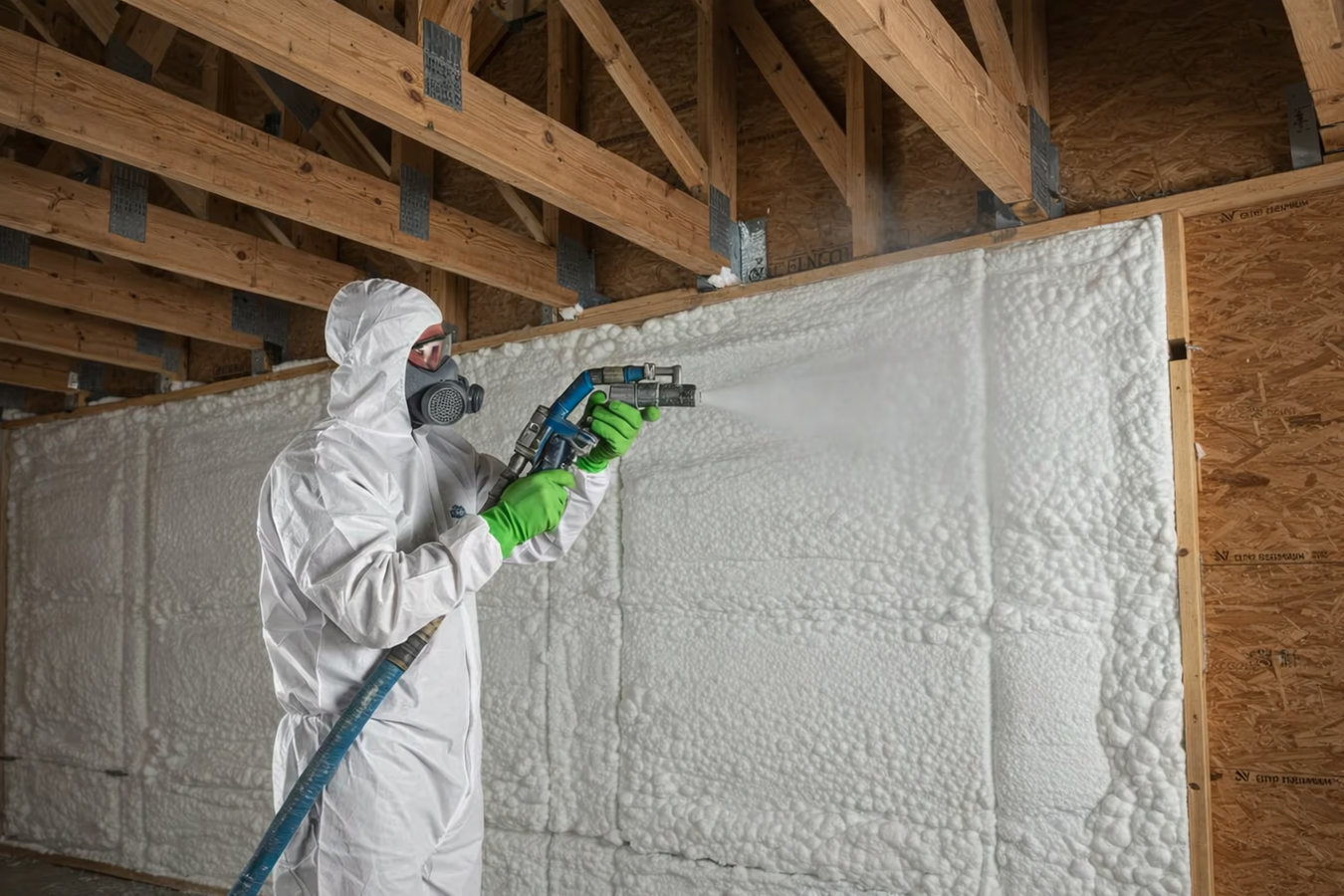
Chippewa Falls has a large share of pre-1940 homes with wood-frame construction and original framing that batts cannot fill evenly. Closed-cell spray foam insulation adheres directly to irregular surfaces, seals air and moisture simultaneously, and is particularly effective on rim joists and crawl space walls in the older downtown neighborhoods where ground moisture from the Chippewa River is a recurring issue.
Chippewa Falls averages about 50 inches of snow per year, and homes with inadequate attic insulation are the ones that develop ice dams along the roofline every January. Many of the Victorian-era and Craftsman bungalow homes near downtown still have their original insulation - thin, settled, and far below what Wisconsin winters require today. Adding depth to the recommended level is the most direct way to lower heating bills and eliminate ice dam risk.
Wooded, hilly terrain throughout Chippewa Falls means many properties have drainage patterns that funnel moisture toward the foundation. An uninsulated or vented crawl space amplifies that problem by allowing cold air and ground moisture to sit directly under the living space all winter. Encapsulating the crawl space eliminates cold floors and cuts off the moisture pathway before it damages your floor structure.
For the ranch and split-level homes built north and east of downtown in the 1950s through 1980s, blown-in insulation is the most practical way to bring attic levels up to current recommendations without disturbing finishes or structures. It fills irregular spaces completely and is installed in a single day for most homes in this size range.
Pre-1940 homes in Chippewa Falls frequently have gaps around original plumbing and wiring that have never been addressed. Air sealing closes those pathways before insulation goes in, which is the step that determines whether a job actually reduces your bills or just adds material over a leaky building envelope.
Spring snowmelt in Chippewa Falls moves through clay-heavy soils slowly, and homes near low areas along Duncan Creek can see real basement moisture pressure from March through May. Insulating basement walls and rim joists with moisture-resistant materials keeps that cold and dampness from reaching your living space while stabilizing temperatures above.
Chippewa Falls sits in Climate Zone 6 alongside Eau Claire, and the two cities share the same severe winter conditions - but Chippewa Falls has a housing stock that skews even older. A significant portion of homes in the city were built before 1940, many of them in the late 1800s and early 1900s. These homes have been through well over a century of Wisconsin winters, and the original insulation - in cases where it was installed at all - has long since settled, degraded, or been partially replaced in ways that left gaps. With roughly 50 inches of annual snowfall and temperatures that routinely drop below zero in January and February, an under-insulated home in Chippewa Falls pays a measurable penalty in heating costs every single year.
The terrain adds complications that newer, flatter cities do not face. Chippewa Falls has rolling, wooded land throughout the residential areas, and many lots have slope drainage patterns that push moisture toward foundations. Homes near the Chippewa River are especially familiar with spring basement seepage when heavy snowmelt moves through the soil quickly. Clay-heavy soils in parts of Chippewa County slow drainage further, compounding the moisture pressure on foundations and crawl spaces. An insulation contractor working in this city needs to account for both the thermal and the moisture sides of the job - they are inseparable here.
We work in Chippewa Falls regularly and know the building stock here well - from the Victorian-era homes and Craftsman bungalows closest to downtown to the ranch and split-level homes that fill the residential areas north and east of the Leinenkugel Brewing Company. We confirm permit requirements through the City of Chippewa Falls and Chippewa County before every project, so there are no surprises when the work begins.
The older downtown neighborhoods - the ones within a few blocks of the Chippewa River and Irvine Park along Duncan Creek - are where we see the most complex jobs. Original wood framing from the early 1900s, stone or early poured-concrete foundations, and decades of piecemeal repairs all require a crew that knows how to work with original materials rather than against them. Highway 29 and Chippewa Street are the routes we take most often coming out of Eau Claire.
We serve the full Chippewa Falls area and the communities nearby. If you are in Bloomer to the north, or back in Eau Claire to the south, the same crew and the same standards apply.
Contact us by phone or through the form on this site. We reply within one business day and can usually schedule an on-site visit in the same week, including for homes in Chippewa Falls and surrounding Chippewa County.
We walk through the home, check current insulation levels, look for moisture and air leak issues, and review any permit requirements. You receive a written estimate with a clear scope - no vague ranges and no pressure to decide on the spot.
Most attic insulation jobs complete in a single day. Spray foam and crawl space work typically run one day. Whole-home projects take two to three days. We protect your interior, work cleanly, and clean up before we leave.
We walk you through what was done and provide any documentation you need to file for Focus on Energy rebates or federal tax credits. We answer questions before we leave the job site.
We serve Chippewa Falls with same-week scheduling and written estimates that tell you exactly what you are getting. No pressure, no vague pricing. Call or send a message and we will respond within one business day.
(534) 400-0045Chippewa Falls is a city of roughly 14,000 people in Chippewa County, about 10 miles north of Eau Claire along the Chippewa River. The city has a stable, long-term population and a strong sense of local identity - it is home to the Jacob Leinenkugel Brewing Company, which has been operating here since 1867 and is one of the most recognizable names in the city. The Chippewa River runs through the city and shapes both the landscape and the drainage conditions that many property owners deal with in spring. Irvine Park along Duncan Creek is a central community gathering place that most families in Chippewa Falls know well.
The housing stock in Chippewa Falls is older than in most nearby cities. The neighborhoods closest to downtown include Victorian-era homes and Craftsman bungalows built between roughly 1880 and 1930, sitting on wooded lots with rolling terrain. Moving north and east of downtown, the character shifts to ranch and split-level homes from the postwar decades. Both eras present insulation challenges - the pre-1940 homes for their age and original materials, the postwar homes for their aging systems that are now 50 to 70 years old. Owner-occupancy rates in Chippewa Falls are high, meaning most homeowners here are long-term residents who invest in keeping their properties in good shape. Nearby communities we also serve include Bloomer to the north and Osseo further east.
Spray foam creates an airtight seal that dramatically reduces energy loss in walls, attics, and crawl spaces.
Learn moreProper attic insulation keeps conditioned air in and outside temperatures out year-round.
Learn moreBlown-in insulation fills gaps and voids in existing cavities without major demolition.
Learn moreWhole-home insulation assessments and installs that improve comfort and cut utility bills.
Learn moreSafe removal of old, damaged, or contaminated insulation to prepare for a fresh install.
Learn moreInsulating your crawl space prevents moisture intrusion and reduces floor-level drafts.
Learn moreDense-pack and batt options for new construction and retrofit wall insulation projects.
Learn moreAir sealing eliminates drafts and reduces HVAC load by closing gaps throughout the building envelope.
Learn moreBasement insulation stabilizes indoor temperatures and helps prevent moisture-related damage.
Learn moreHigh-density closed-cell foam provides superior R-value and acts as both insulation and vapor barrier.
Learn moreOpen-cell spray foam is a cost-effective option for interior walls and sound dampening.
Learn moreSealing attic bypasses prevents conditioned air from escaping through ceiling penetrations.
Learn moreVapor barriers block ground moisture from entering your crawl space and degrading insulation.
Learn moreProfessional vapor barrier installation protects structural materials and maintains indoor air quality.
Learn moreRetrofit insulation upgrades existing homes with minimal disruption to walls and finishes.
Learn moreCommercial insulation solutions for offices, warehouses, and industrial buildings of all sizes.
Learn moreChippewa Falls winters are long and your heating bill shows it. If your insulation has not been upgraded in years, now is the right time to find out where you stand. We schedule fast and charge fair.